Questions to ask your grandmother
Your grandmother carries decades of memories that no one else can access. The questions to ask your grandmother matter because she holds answers to questions yo…
· 17 min read · by Autobiographai
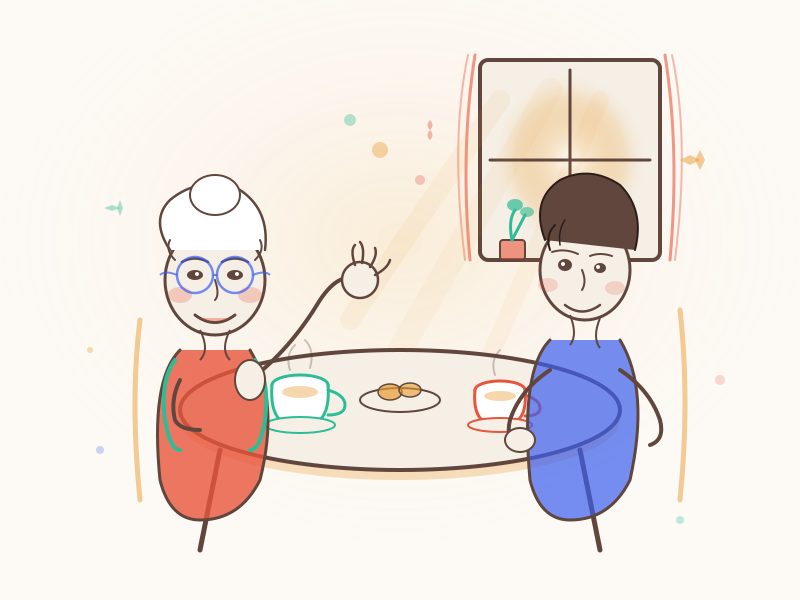
Your grandmother carries decades of memories that no one else can access. The questions to ask your grandmother matter because she holds answers to questions you haven't thought to ask yet, stories about people you'll never meet, details about a world that no longer exists. Most grandchildren wait too long. They assume there will be another holiday, another phone call, another afternoon to finally sit down and ask about the things that matter. Then the chance passes, and the stories go with it.
Grandmother interview questions serve a purpose beyond curiosity. They unlock things to ask your grandmother that transform a pleasant visit into something lasting. The right conversation starters for grandma can reveal the texture of her childhood home, the sound of her mother's voice, the fears she carried through decades of change. What questions should I ask my grandmother? The ones that invite her to remember not just events, but the weight of living through them. How do I get my grandma to open up about her past? By asking questions that show you actually want to know.
This article provides more than seventy specific questions to ask grandma about her life, organized by theme and designed to unlock real stories rather than one-word answers. You'll find grandma questions to ask about childhood, love, work, hardship, wisdom, and your own relationship. And because asking the right question is only half the skill, you'll also find guidance on how to interview your grandmother in ways that invite openness rather than deflection.
Why your grandmother's stories matter more than you think
The window that closes without warning
No one schedules the last conversation. The final time you could have asked your grandmother about her wedding day, her first job, the sibling who died young, the dream she gave up, passes without announcement. One visit she's sharp and eager to talk. The next, the details have faded. Or there is no next.
This reality shapes how to approach questions to ask your grandmother. Not with morbid urgency, but with honest recognition that the window for these conversations has a limited span. Your grandmother is the only living person who knows what her mother's kitchen smelled like. She alone remembers the specific shade of fear she felt during the war, the exact words her father said when she left home, the name of the friend who helped her through her hardest year.
What gets lost when no one asks
When a grandmother dies without being asked the right questions, entire categories of knowledge vanish. Not just facts, dates, names, but the texture of daily life in another era. How did she wash clothes before machines? What did people talk about at dinner? How did neighbors treat each other? What did heartbreak feel like when there was no word for therapy, no expectation of emotional support, no language for the internal life?
The loss extends beyond historical detail. Family patterns, inherited behaviors, unexplained tensions, often trace back to events only the oldest generation witnessed. The reason your mother never learned to cook. The origin of the feud with the cousins on the other side of the country. The story behind the photograph where everyone looks unhappy. Your grandmother knows. Or knew.
The difference between knowing about someone and knowing them
You know your grandmother exists. You know her name, her face, her role in the family structure. But do you know her? The difference lies in the stories only direct questions can surface. What frightened her as a child. What she dreamed of becoming before life intervened. What she regrets. What she's proudest of. What she wishes someone had asked her years ago.
What to talk about with grandmother goes beyond catching up on health and weather. It means asking the questions that let you see her as a full person, someone who was once young and uncertain, who made choices with incomplete information, who loved and lost and adapted. The questions that follow are designed to open that view.
Questions about her childhood and early years
The house she grew up in
The physical space of childhood shapes memory in ways nothing else does. These questions anchor your grandmother in the sensory world of her earliest years.
- What did your childhood home look like from the outside?
- Which room did you spend the most time in?
- What did your kitchen smell like when your mother was cooking?
- Where did you sleep, and what could you see from your bed?
- What sounds woke you up in the morning?
- Was there a spot in the house that felt like yours alone?
- What happened to that house? Do you know if it still exists?
School days and friendships
School occupies a central place in childhood memory, even for those who left early.
- How far was your school from home, and how did you get there?
- What do you remember about your first day of school?
- Who was your favorite teacher, and what made them special?
- What subject did you love? What subject did you dread?
- Who was your closest friend, and what did you do together?
- What games did you play at recess?
- Did you ever get in trouble at school? What happened?
- How far did you go in school, and why did you stop when you did?
Family dynamics and daily routines
The rhythm of daily life reveals more than dramatic events.
- What was your mother like when she was young?
- What did your father do for work, and did you ever see him do it?
- What chores were you responsible for?
- What did a typical dinner look like in your house?
- How did your family celebrate birthdays or holidays?
- Did you have siblings? What was your relationship like with each of them?
- Who in your family were you closest to?
- What rules did your parents enforce that seemed unfair at the time?
The world outside her door
Childhood exists within a larger context. These questions connect personal memory to historical moment.
- What was your neighborhood like when you were growing up?
- What was happening in the world that you remember hearing adults talk about?
- Did your family have a radio? What do you remember listening to?
- What did people worry about in those days?
- What did you know about the world beyond your town?
- What did you dream of becoming when you grew up?
- What were you most afraid of as a child?
For more questions specifically focused on early years, see this guide on questions about your grandparents' childhood.
Questions about love, marriage, and family life
How she met your grandfather
The origin story of a marriage often carries details that get lost if no one asks.
- Where and when did you first see my grandfather?
- What was your first impression of him?
- What did he look like back then?
- How did you know you wanted to see him again?
- What did your parents think of him?
For a deeper conversation on this topic, you might also use these questions about how your grandparents met.
Courtship and wedding memories
Dating customs vary dramatically across generations. These questions surface the specific texture of romance in her era.
- How did people your age meet potential partners?
- Where did you go on dates? What was considered appropriate?
- How long did you know each other before you got engaged?
- How did he propose? What did you say?
- What did your wedding day look like? What did you wear?
- Who came to the wedding? Who was missing that you wished could be there?
- What do you remember about your wedding night or honeymoon?
The early years of marriage
The first years of a marriage often hold stories that get smoothed over in later retellings.
- Where did you live when you were first married?
- What surprised you most about being married?
- What was your biggest disagreement in the early years?
- How did you divide responsibilities?
- What did you learn about your husband that you didn't know before the wedding?
Becoming a mother
Motherhood transforms identity. These questions invite reflection on that transformation.
- What do you remember about finding out you were pregnant the first time?
- Where did you give birth? What was the experience like?
- What surprised you about becoming a mother?
- What was hardest about raising children in your generation?
- What do you wish you'd known before becoming a parent?
- How did motherhood change your relationship with your own mother?
Questions about work, skills, and daily life
Jobs she held and work she did
Many grandmothers' work histories went unrecorded. These questions recover what might otherwise be lost.
- What was your first job? How old were you?
- What jobs did you hold over your life?
- What did you like about working? What did you dislike?
- Did you ever face discrimination at work because you were a woman?
- What coworkers do you still remember?
- If you didn't work outside the home, what did a typical day look like?
Skills she learned and taught
The transmission of practical knowledge often happens invisibly.
- What skills did you learn from your mother?
- What skills did you teach your children?
- What could you do that most people today can't?
- What recipe or technique are you proudest of?
How she managed a household
Running a household before modern conveniences required skills that have largely disappeared.
- How did you do laundry when you were first married?
- What was meal planning like without a refrigerator or freezer?
- How did you preserve food?
- What did you make yourself that people now buy?
- What was the hardest part of keeping a household running?
Money, budgets, and making do
Financial life in earlier generations often involved constraints modern families don't face.
- How did your family handle money when you were growing up?
- What did you do when money was tight?
- What was the most creative way you stretched a budget?
- What did you go without that you wished you could have had?
Questions about hard times and how she got through them
Losses she carried
Grief shapes a life. These questions, asked gently, can surface stories that have never been told.
- Who did you lose that changed you?
- How did your family handle death when you were young?
- Was there a loss you never fully got over?
- How did you keep going after the hardest losses?
Challenges she faced as a woman of her era
Every generation of women faces specific constraints. Understanding your grandmother's helps you understand her choices.
- What could you not do because you were a woman?
- What expectations did people have for women that felt unfair to you?
- Did you ever want something you couldn't have because of the times?
- How did you navigate limitations without losing yourself?
What she learned from difficulty
Resilience isn't abstract. It's built from specific moments of getting through.
- What was the hardest period of your life?
- What got you through it?
- What did you learn from difficulty that you couldn't have learned any other way?
- What do you know now that you wish you'd known when you were struggling?
Questions about beliefs, values, and wisdom
Faith, spirituality, and meaning
Inner life often goes unasked about. These questions open that territory.
- Did you grow up with a religious faith? How did it shape you?
- Has your relationship with faith changed over your life?
- What do you believe happens after death?
- What gives your life meaning now?
What she believes matters most
A lifetime of experience distills into convictions. These questions surface them.
- What do you believe matters most in life?
- What values did you try to pass to your children?
- What do you wish more people understood?
- What mistake do you see people make over and over?
Advice she'd give her younger self
Hindsight offers clarity. These questions invite your grandmother to share it.
- What would you tell your twenty-year-old self?
- What do you wish you'd done differently?
- What are you proudest of?
- What risk do you wish you'd taken?
What she hopes you'll remember
Legacy questions give your grandmother a chance to shape how she's remembered.
- What do you want your grandchildren to know about you?
- What do you want your great-grandchildren to know about the family?
- What story do you hope gets passed down?
- What do you want people to say about you after you're gone?
Questions about you and your relationship
Her memories of your childhood
Turning the lens toward your grandmother's memories of you creates mutuality in the conversation.
- What do you remember about the day I was born?
- What was I like as a baby? As a small child?
- What do you remember about our earliest time together?
- What did we do together that you remember fondly?
- What did you notice about me that maybe my parents didn't?
What she sees in you
Your grandmother has watched you become who you are. She sees patterns you might not.
- Who in the family do you think I'm most like?
- What do you see in me that reminds you of someone else?
- What do you think my strengths are?
- Is there anything about me that worries you?
Stories she's never told you
Every relationship has untold stories. These questions invite them forward.
- Is there something you've wanted to tell me but never found the moment?
- Is there something you've wanted to ask me?
- What do you wish I understood about you?
- What do you hope I'll remember about us?
For a broader collection of questions covering both grandparents, see this printable list of 100 questions for grandparents. And if you also want to interview your grandfather, there's a separate guide on questions specifically for grandfathers.
How to ask these questions so she actually answers
Timing and setting that invite openness
The circumstances of a conversation shape its depth. Asking your grandmother about her first love at a crowded family dinner will yield different results than asking over tea in her kitchen when no one else is around.
Choose a time when she's rested, not rushed, and not performing for an audience. Late morning often works better than evening. A familiar setting, her home rather than yours, tends to unlock more. If you're recording, explain why before you start, and give her the option to say no to any question.
For detailed guidance on the technical and emotional aspects of recording, see this guide on how to record your grandmother's voice.
Starting with objects, photos, or food
Abstract questions about the past often land flat. Concrete objects give memory something to grab.
Bring an old photograph and ask who's in it. Ask about the recipe she's making. Pick up an object from her shelf and ask where it came from. The physical world anchors conversation in ways that "tell me about your childhood" cannot.
Photo albums work particularly well. As she turns pages, stories emerge without prompting. Your role becomes following the thread rather than generating questions.
Following the thread instead of the script
The questions in this article are starting points, not a checklist. The best moments in any interview come from following an unexpected turn.
If you ask about her first job and she mentions a coworker who became a lifelong friend, follow that. Ask about the friend. Ask what they did together. Ask what happened to her. The script will still be there when the tangent ends, but the tangent might contain the story that matters most.
What to do when she says "I don't remember"
Memory is imperfect. Your grandmother will not remember everything, and some of what she remembers will be wrong. This is normal.
When she says "I don't remember," try rephrasing. Instead of "What year did that happen?" try "Was it before or after you were married?" Instead of "What did he say?" try "What do you remember feeling in that moment?" Sometimes a different angle unlocks what seemed inaccessible.
If she truly doesn't remember, let it go. Move to another question. Come back later, perhaps with a photograph or object that might trigger the memory.
And if she doesn't want to answer, respect that. Some stories are hers to keep.
For a complete guide to the interviewing process, including how to handle emotional moments and structure multiple sessions, see this complete guide to interviewing your grandparents.
Your grandmother's stories are waiting. The only question is whether you'll ask for them while you still can.
| Question Category | Number of Questions | Best Time to Ask |
|---|---|---|
| Childhood and early years | 30 | When looking at old photos |
| Love, marriage, family | 23 | Quiet afternoon, one-on-one |
| Work and daily life | 16 | While she's doing a familiar task |
| Hard times and resilience | 12 | When trust is already established |
| Beliefs and wisdom | 16 | When she's reflective, not rushed |
| Your relationship | 13 | Near the end of a longer conversation |
The table above summarizes what this article offers. Use it as a reference, but remember: the best question is the one that follows naturally from what she just said.
Your grandmother has lived a life no one else can describe. The questions exist. The time, for now, still does. What remains is the asking.
Related articles
- Theme
Questions to ask your parents
Most people assume they have time. Time to sit down with their parents over coffee, time to ask about the stories they've only half-heard, time to finally recor…
100 questions to ask your parents
You've been meaning to do this for years. Sit down with your parents, ask the real questions, capture the stories before they fade. But every time the moment ar…
Questions to ask your mother
Most people believe they know their mother. They grew up watching her, listening to her voice, absorbing her habits. But ask yourself: how much do you actually …
Questions to ask your dad
Most people who want to ask their father about his life face the same frustrating pattern: you ask a question, he gives a three-word answer, and the conversatio…
Questions to ask grandparents about family history
You sit down across from your grandmother, recorder ready, notebook open. "So," you say, "what was your childhood like?" She pauses, looks at the ceiling, and o…
Ready to write your autobiography?
Your grandmother carries decades of memories that no one else can access. The questions to ask your grandmother matter because she holds answers to questions yo…
Start